
Sequin Fringe: Movement, Light and the Engineering of Detail
- Posted by Flavio Marini
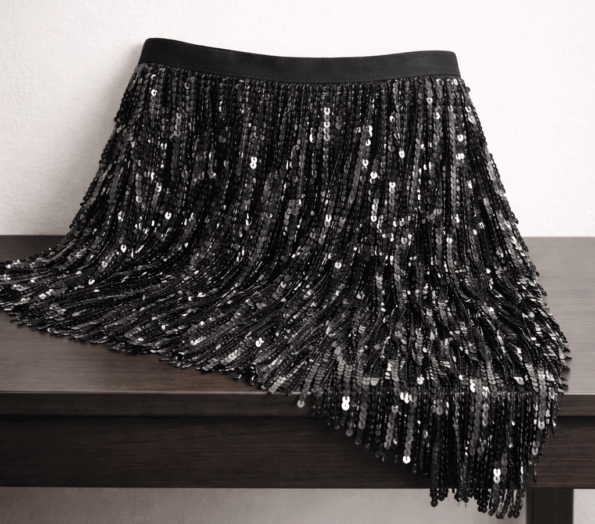 Sequin fringe is one of the most striking and dynamic techniques in contemporary fashion. It brings together sparkle, movement and three-dimensionality, turning a textile surface into a living element that responds to light and motion.
This technique is particularly valued in couture, eveningwear and highly creative capsule collections, where the detail takes centre stage and helps define the garment’s identity.
A technique brought to life by movement
Unlike conventional embroidery, sequin fringe is a moving structure: it follows the body, accentuates each step and multiplies reflections.
The visual effect evolves continuously according to several design choices:
- fringe length
- sequin weight
- hole position (central or off-centre)
- application density
Each of these affects how the garment looks and performs.
Technique and industrial construction
Sequin fringe is made from vertical rows of sequins sewn with precise spacing to ensure:
- consistent spacing
- mechanical stability of the base fabric
- freedom of movement for the fringe
- resistance to wear and pulling
The textile base may be tulle, technical mesh, knit fabric or a closely woven material, depending on the final use.
The technical challenge is to balance weight, flexibility and durability, especially for production at scale.
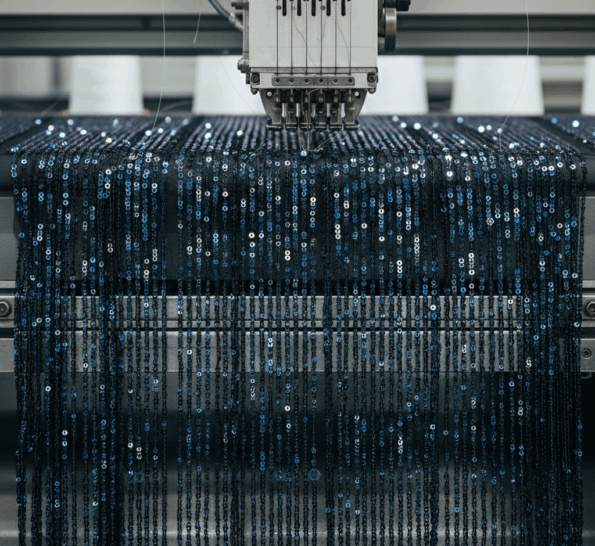
Sequins being assembled into fringe
Advanced customisation of materials and effects
Sequin fringe can be developed in many configurations to suit both the creative concept and industrial requirements:
- different sequin shapes and sizes (micro, standard and oversized)
- a wide range of colours
- special finishes: glossy, matte, metallic, printed or flocked
- PET sequins, also available in a recycled version on request
- central holes for more even, orderly movement
- off-centre holes for a livelier, less regular and more dramatic effect
These variables allow the fringe to be designed as a structural part of the design rather than a simple decoration.
Applications
Sequin fringe can be used across many areas of fashion:
- couture and high-end ready-to-wear skirts
- evening and red-carpet dresses
- runway garments and showpieces
- details on bustiers, tops and sleeves
- decorative panels for outerwear
- fashion accessories such as bags, clutches and belts
- fashion footwear with moving elements
- costumes for dance, theatre and performance
- capsule collections with a strong visual identity
From a handcrafted look to industrial production
The added value of this technique is its ability to reproduce a highly handcrafted look through industrial processes while maintaining:
- consistent results
- ongoing quality control
- efficient production times
- reliability in production
This enables design teams to incorporate complex techniques into structured collections without sacrificing visual impact or character.
At Marini Ricami 1986, we develop and industrialise complex decorative techniques for fashion, footwear and accessories.
We work with design teams and brands to turn a creative idea into a technically feasible product, ready for prototyping and production.
Are you developing a collection and looking for a controlled, production-ready way to use sequin fringe?
Contact us to explore samples, technical feasibility and tailored solutions for your project.
0 comments on Sequin Fringe: Movement, Light and the Engineering of Detail