
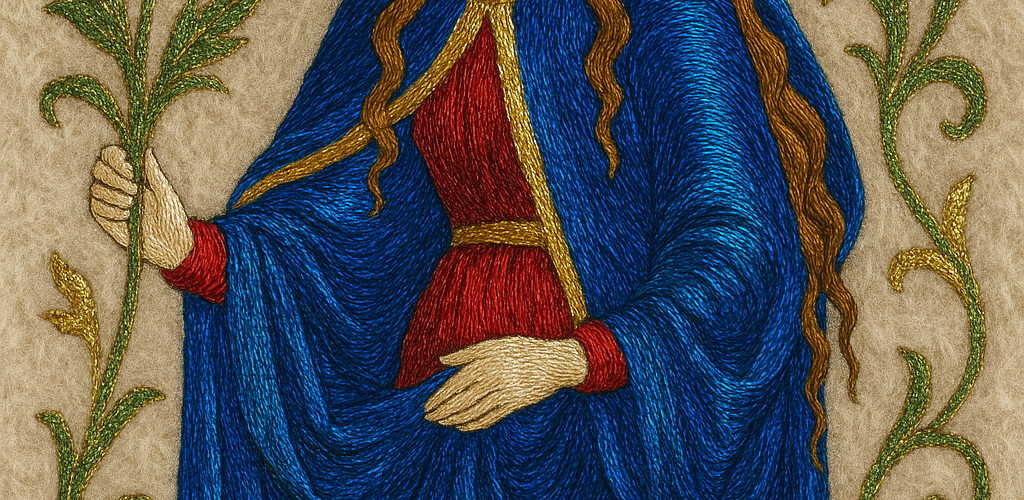
Medieval Embroidery: History, Techniques and Modern Interpretations
- Posted by Flavio Marini
Embroidery as a visual language
In the Middle Ages, embroidery was more than decoration. Symbols, precious threads and textiles could communicate devotion, status and belonging. The historical overview “Ricamare” by Italia Medievale describes the place of embroidered work in medieval culture.
Refined techniques and symbolic motifs
Medieval embroiderers used a range of stitches and materials to create detailed images and ornament. Techniques associated with this tradition include:
- Satin stitch for smooth areas of colour.
- Goldwork and couching, in which metal threads are secured to the fabric.
- Laid work and whitework.
- Assisi embroidery, using the contrast between worked and unworked areas.
Such work could be made on linen, velvet and other grounds. Florence’s Fondazione Lisio course on the history of embroidery in Italy studies surviving textiles alongside documents and images.
Masterpieces of Opus Anglicanum
-
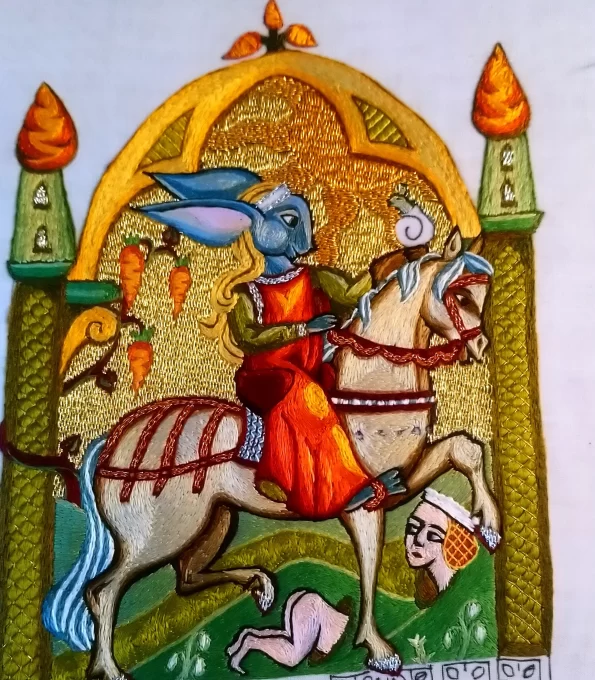
- Rabbit riding a horse in medieval-style embroidery
-
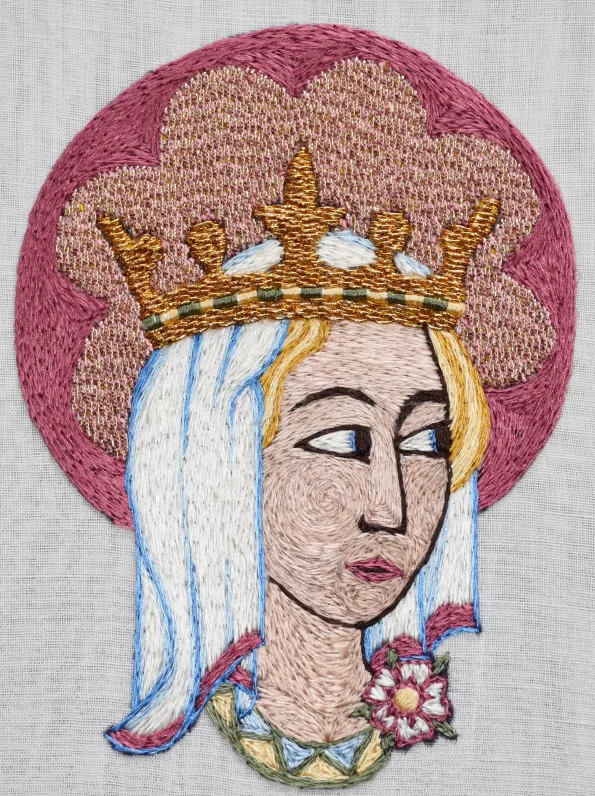
- Rose Queen medieval-style embroidery
Opus Anglicanum, Latin for “English work”, names the celebrated English embroidery of the medieval period, especially its silk and metal-thread work. Pieces from the twelfth to fourteenth centuries often used:
- Silk and gold or silver threads for richly coloured and luminous surfaces.
- Split stitch for fine detail and shading.
- Underside couching to secure metal thread and create glowing grounds.
The work was prized by religious and royal patrons. Mabel of Bury St Edmunds is a rare medieval embroiderer named in records connected with King Henry III. The Victoria and Albert Museum’s introduction shows why Opus Anglicanum remains important to the history of textiles.
A contemporary artist: Tanya Bentham
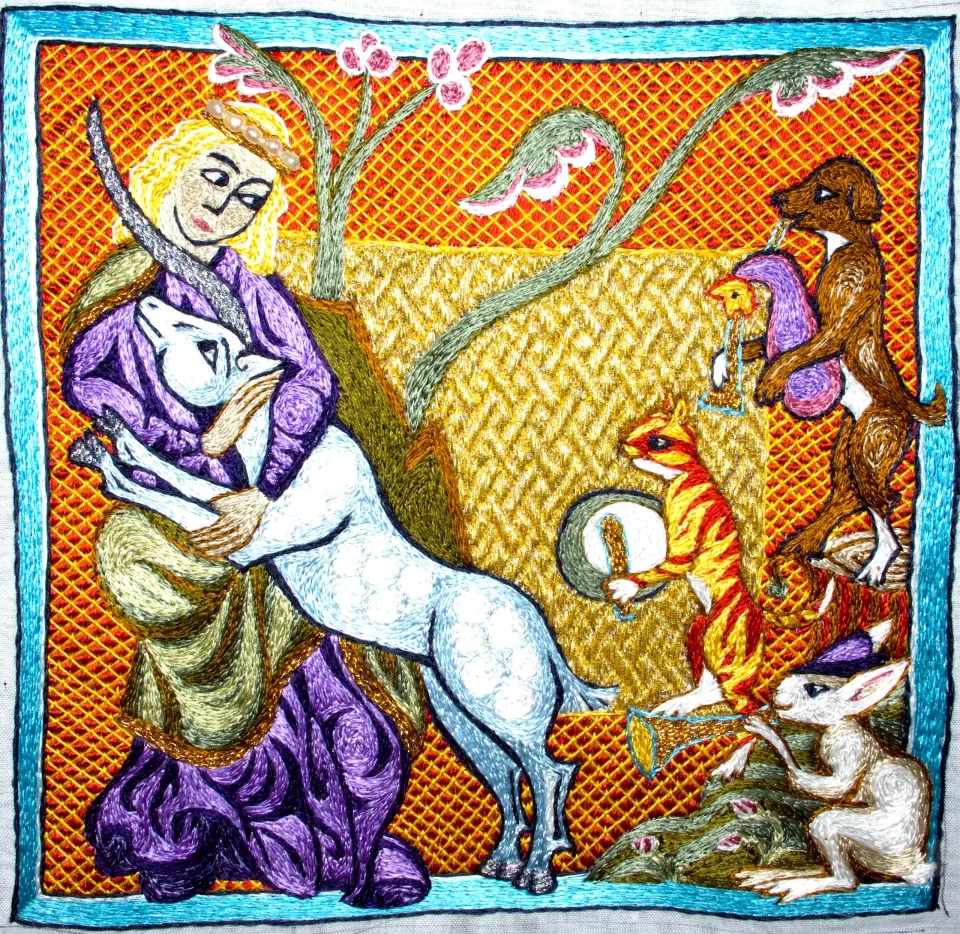
Hand embroidery depicting a woman and unicorn in a medieval style
Contemporary embroiderer Tanya Bentham specialises in medieval needlework and teaches the techniques of Opus Anglicanum. Her work and practical guide explore split stitch, underside couching, silk and gold thread, while bringing a contemporary sensibility to historical motifs. Learn more through Tanya Bentham’s website.
Medieval inspiration in modern embroidery
Marini Ricami 1986 Srl can reinterpret the visual language of medieval embroidery for industrial production. The aim is to develop designs inspired by historical work, rather than reproduce hand techniques stitch for stitch.
Potential grounds include velvet, furnishing fabrics and technical or padded textiles. Modern threads such as viscose, rayon and metallic-effect yarns can create rich surfaces. Long satin stitches, botanical motifs, Gothic borders and symbolic compositions can be adapted for:
- Fashion and accessories.
- Interior furnishings.
- Stage and theatre design.
Explore our historical collection by appointment
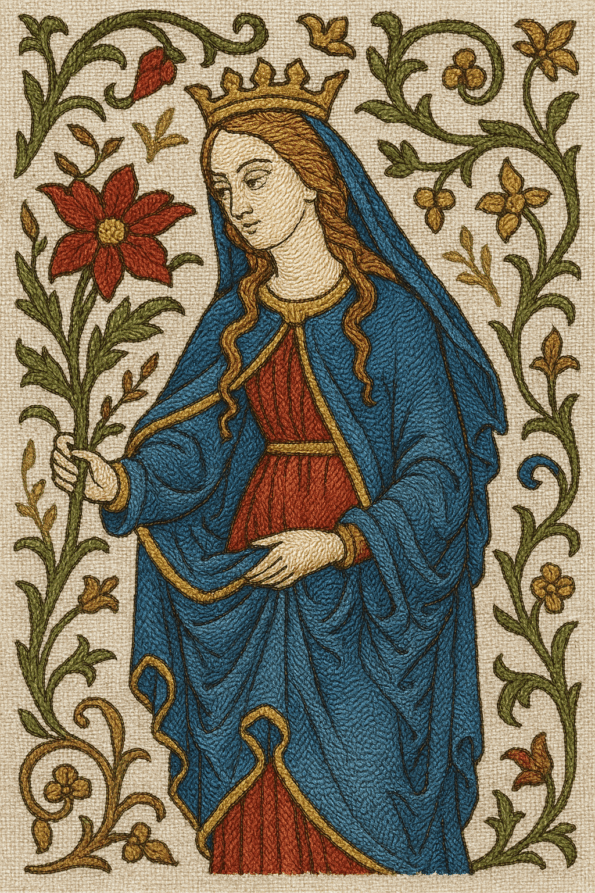
Machine-embroidered queen motif inspired by medieval imagery
Our internal collection brings together technical trials and samples inspired by different periods and embroidery styles. We can show relevant samples by appointment to design studios, architects and companies interested in reinterpreting historical techniques.
Contact us to arrange a meeting and discuss a collection that brings the narrative power of medieval imagery into industrial embroidery.
0 comments on Medieval Embroidery: History, Techniques and Modern Interpretations