
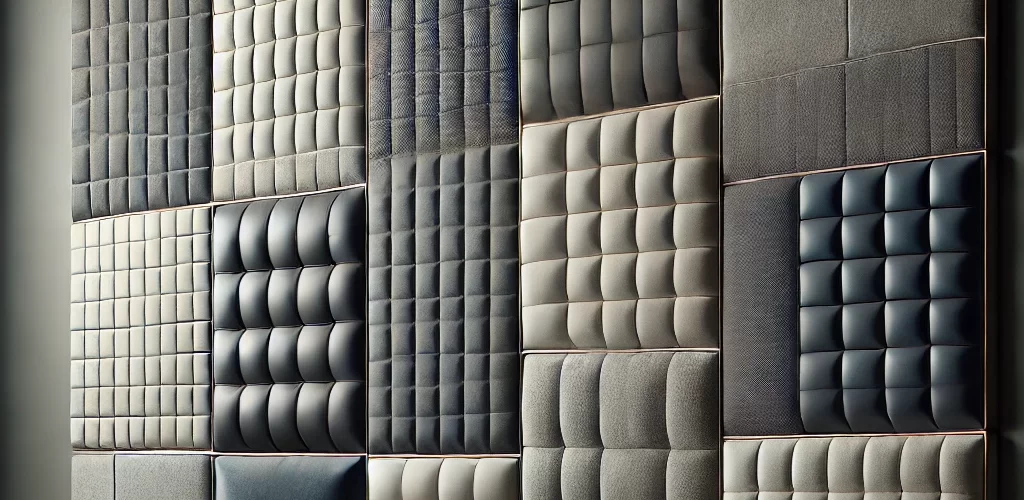
Marini Acoustic: Custom Decorative Acoustic Panel Concepts
- Posted by Flavio Marini
Marini Acoustic: decorative panel concepts for interiors
Marini Acoustic brings Marini Ricami’s decorative textile techniques to the idea of custom panels for interior spaces. A panel can combine an embroidered or quilted surface with a construction selected for the room. Appearance, attachment, fire requirements and acoustic behaviour all need to be defined for the actual project; visual treatments alone do not establish sound absorption.

Illustrative office concept; the image does not document an installed or tested panel.
Features to develop for a Marini Acoustic project
1. Material selection
The Italian article proposes leather, velvet and Alcantara among the visible finishes. Each has a different texture and care profile. The appearance layer, core, mounting system and any backing should be selected together for the intended setting. A material’s decorative qualities do not by themselves determine the panel’s acoustic performance.
2. Embroidery, quilting and perforation
Embroidery, decorative stitching, quilting and perforation can form a custom surface. These techniques allow patterns, tactile relief and branding to be adapted to the interior design. Their influence on sound absorption depends on the complete panel construction and should be assessed by an acoustic specialist.
-
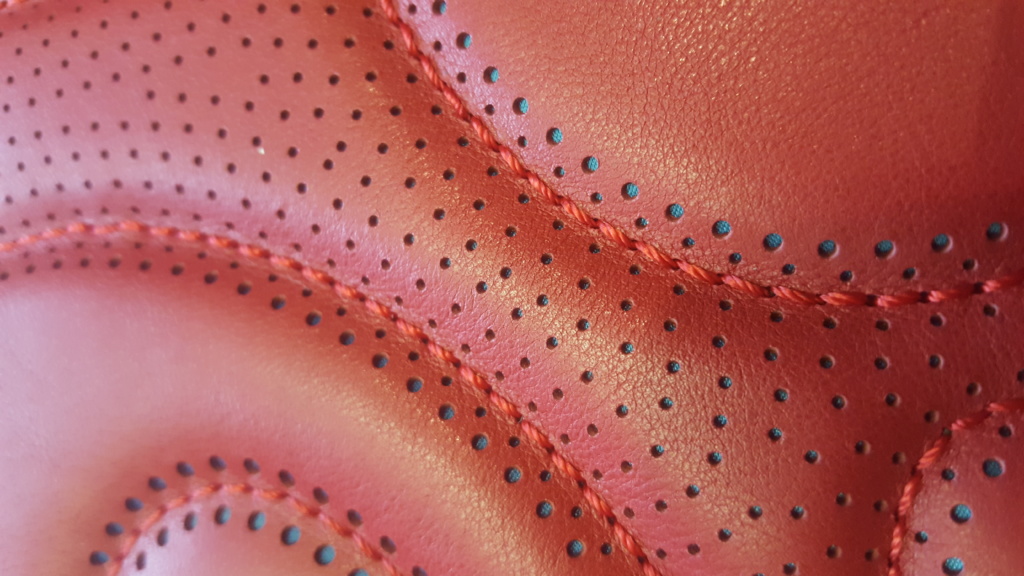
- Perforated and stitched leather sample
-

- Embroidered and padded leather sample with perforations
The gallery above shows leather processing and decorative stitching samples. It does not show measured acoustic panels.
3. Shape and size
Panels can be planned in different dimensions and arrangements for a wall or ceiling. A tailored layout may be relevant to a conference room, theatre, restaurant, office or home. The available sizes, fixing method and building requirements must be confirmed during design.
4. Acoustic performance
The goal of an acoustic panel is to help manage reflections and reverberation in a room. The result depends on the panel’s core, face material, perforation, air gap, placement and the room itself. No absorption coefficient or noise-reduction figure is provided here; performance claims require testing of the specified panel and assessment for the installation.

Illustrative restaurant concept; it is not evidence of a measured reduction in noise.
5. Potential settings
- Hotels, restaurants and bars: decorative surfaces can be planned alongside the room’s acoustic needs.
- Theatres and meeting rooms: panel design should be coordinated with an acoustic plan and applicable safety requirements.
- Homes and offices: the finish can be adapted to the interior palette and maintenance needs.
- Transport and yachts: any proposal requires project-specific material, fire and installation checks.
-

- All-over embroidered surface with a tufting effect
-

- Quilted textile surface with a raised floral pattern
These photographs show decorative textile and quilted-surface samples, not acoustic test results.
Planning a custom panel
Architects, interior designers and manufacturers can discuss finishes, motif, dimensions and the intended space with us. A useful brief includes the room type, mounting constraints, cleaning requirements and any acoustic or fire-performance targets. Material samples and technical tests can then be planned for the specific construction.
Contact Marini Ricami 1986 to explore a Marini Acoustic concept for your project.
0 comments on Marini Acoustic: Custom Decorative Acoustic Panel Concepts