
Industrial Embroidery for Fashion, Leather Goods and Interiors
- Posted by backoffice
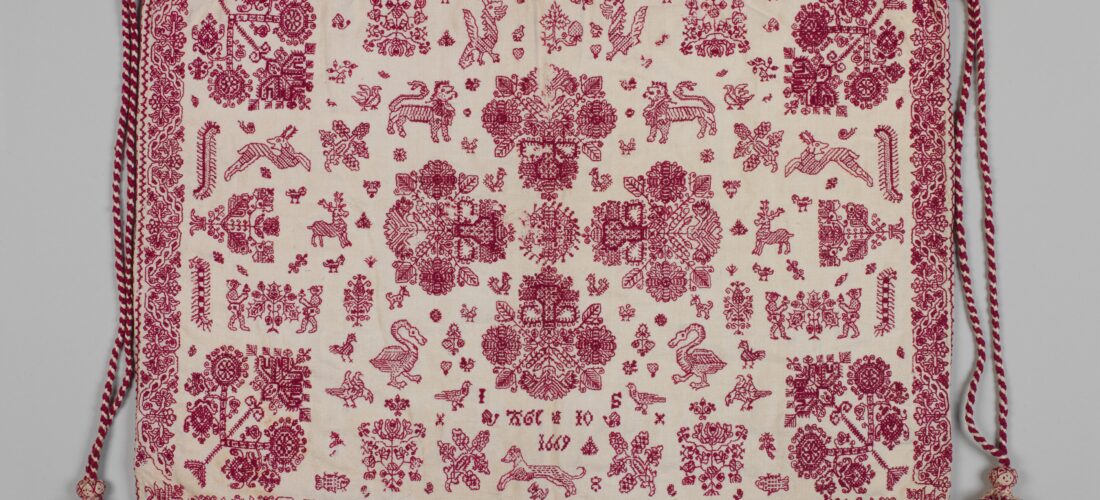
Industrial embroidery for fashion can transform a historic textile reference into a contemporary surface for clothing, leather goods, footwear and interior design. In this study, Marini Ricami 1986 starts with a seventeenth-century English work bag, analysing its lines, rhythm, stitches and volume to develop samples that can be produced consistently.
The historic piece is not copied. It becomes a starting point for new embroidery, with stitch density, thickness, materials and scale adjusted to the final product.
The historic reference: an English work bag from 1669
The Metropolitan Museum of Art identifies the object as a British work bag dated 1669. The museum describes a linen ground embroidered with wool thread using double running and herringbone stitches. Its composition brings together human figures, plants, flowers, birds and other animals with ornamental borders and geometric details.
The limited colour palette contributes to its impact. Red embroidery stands out against the natural-coloured ground, making a complex collection of motifs easy to read. The same principle can inform contemporary monochrome embroidery: variations in stitch, density and texture create depth without relying on many colours. The Metropolitan Museum’s collection record shows the original object and its documented details.
From hand stitching to industrial embroidery for fashion
Translating a historic embroidered object into industrial production begins with a technical reading of its lines. Not every detail needs the same density or thickness. A branch may call for a lighter line than a flower, while a geometric border may gain definition from a corded stitch or a denser sequence.

Marini Ricami 1986 studies embroidery and textiles traditionally made by hand, then translates their visual language into processes for electronic embroidery machines. Digital planning gives us control over stitch direction, density, tie-offs, overlays and production sequence. The aim is to retain the material character of the thread while achieving the precision and repeatability needed for industrial production.
Lines, fills, cording and raised effects
Small figurative motifs can be developed with light embroidered outlines, selective fill stitches and cords of varying thickness. Chain stitch or Cornely techniques can emphasise details when a design calls for a more continuous, tactile line. Varying the yarn count, stitch density and layering produces different raised effects and adds depth to the surface.

The base fabric need not be natural linen. The design can be developed on cotton, wool, technical textiles or leather. Prototyping helps assess stability, tension and how each material behaves during embroidery. This approach treats the stitching, substrate and volume as parts of one decorative surface.
Custom embroidery for clothing, leather goods, footwear and interiors
The modular nature of these motifs makes it possible to work at different scales. On clothing, a vertical design might run along the front of a jacket, a pocket or a panel; a border could follow a yoke, hem or tailored construction. Selecting and redrawing just a few elements creates an independent motif for a new collection.

Industrial embroidery for leather goods
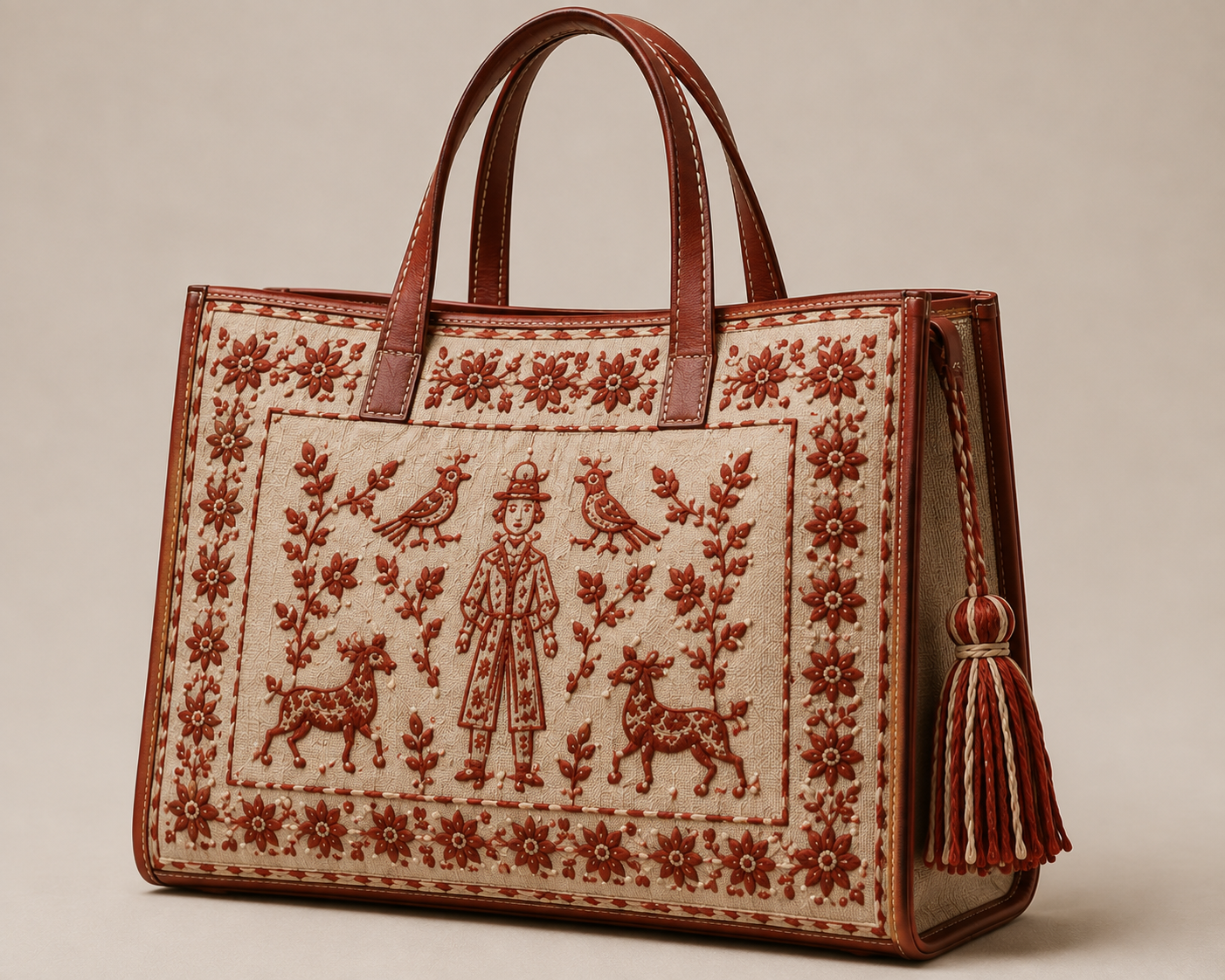
For leather goods, flowers, animals and small scenes can become panels for tote bags, flaps, pouches and inserts. Smooth leather, fabric and thread can be combined to create both graphic contrast and texture, while keeping the embroidery compatible with subsequent cutting and assembly.
Industrial embroidery for footwear
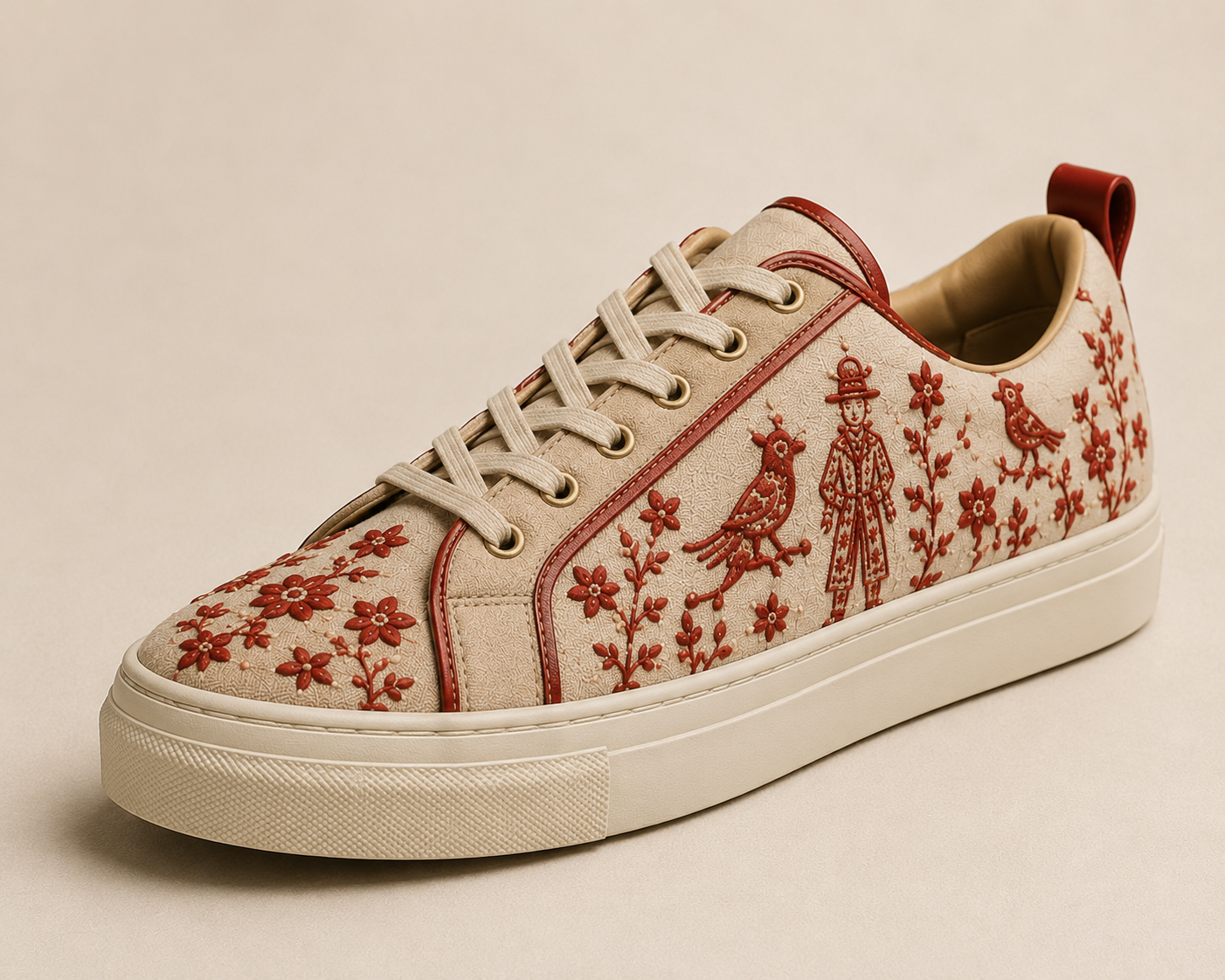
On footwear, embroidery can be applied to uppers, tongues and side panels. Motif size, stitch density and placement are planned around seams and later assembly stages.
Embroidery for interior design
Interior applications allow the motifs to grow in scale. Cushions, decorative panels, coverings and runners can accommodate wider borders and continuous compositions. Controlled repetition makes it possible to develop coordinated pieces from the same graphic vocabulary.

From prototyping to industrial production
The concepts shown here are contemporary design studies by Marini Ricami 1986 inspired by the historic object’s visual language. They are not the original work bag and do not imply that our company made the museum object. The museum reference serves as a starting point for new samples, with changes to scale, material, stitch construction and intended use.
Marini Ricami 1986 works with design teams to develop custom industrial embroidery, from the first technical trials through prototyping and production. Contact us to discuss samples for your collection and define materials, dimensions, raised details, colours and the final application together.
0 comments on Industrial Embroidery for Fashion, Leather Goods and Interiors