
Industrial Bead and Bugle Bead Embroidery
- Posted by Flavio Marini
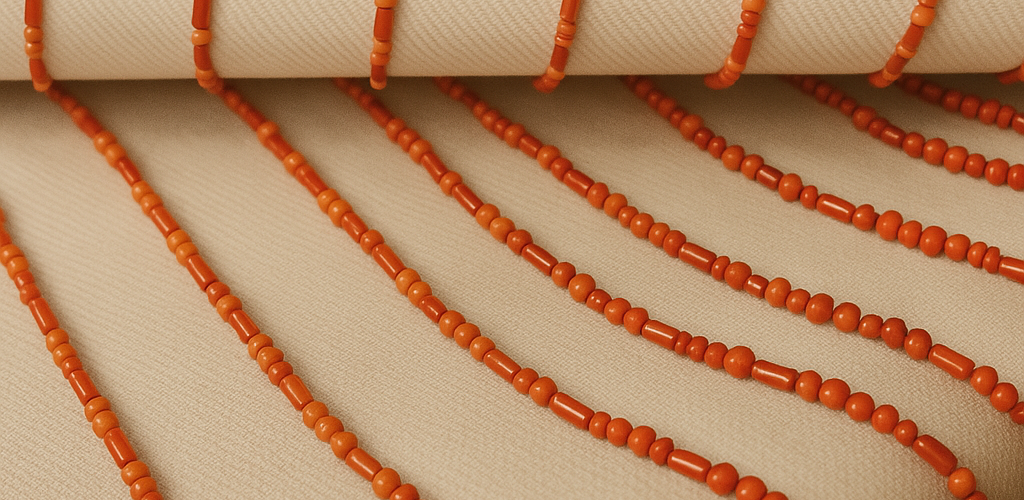
Glass beads and bugle beads bring light, colour and texture to embroidery. Using multi-head Tajima embroidery machines, we can apply these decorative elements in repeatable production while retaining the detailed appearance associated with hand embellishment.
Industrial applications of beads and bugle beads
The original Italian article describes glass elements ranging from approximately 1.2 to 4 mm, with transparent, opaque, coloured and iridescent finishes. Beads can be stitched in lines, clusters or more complex patterns. The available sizes, finishes and any OEKO-TEX® STANDARD 100 documentation must be checked for the exact material and finished project; a certification should not be assumed for every bead or product.
Possible elements include:
- Round or teardrop beads
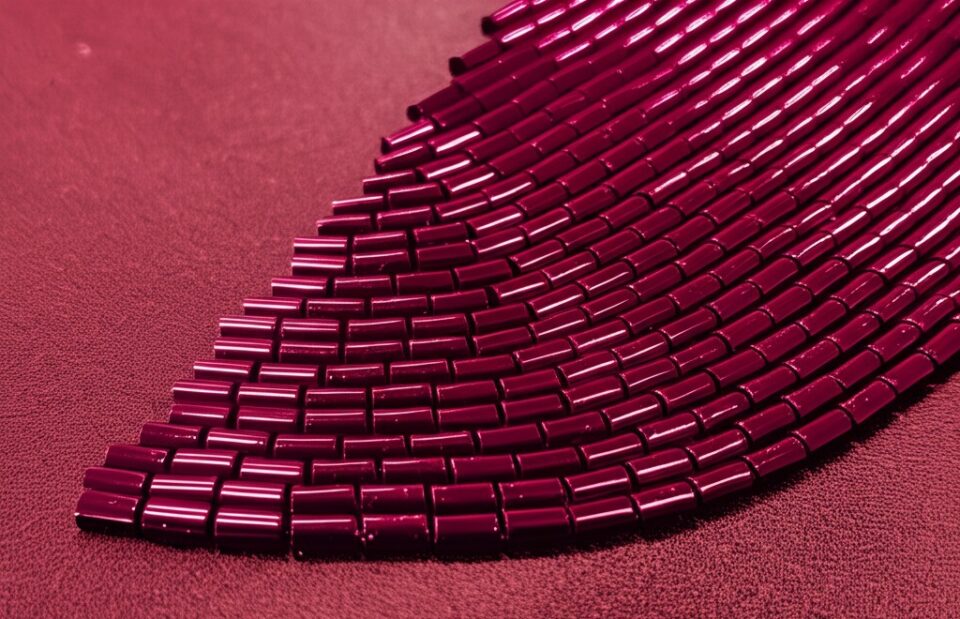
- Tubular glass bugle beads
- Combinations of embroidery stitches and other decorative components
-
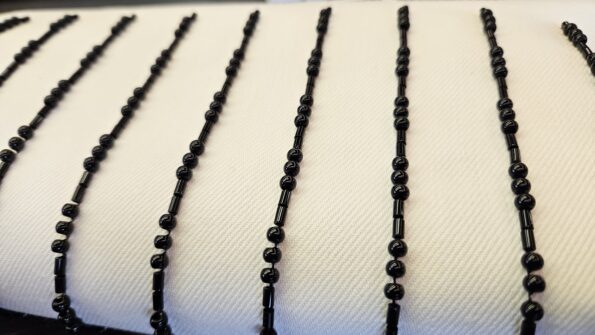
- Glass beads and bugle beads applied by embroidery machine
-
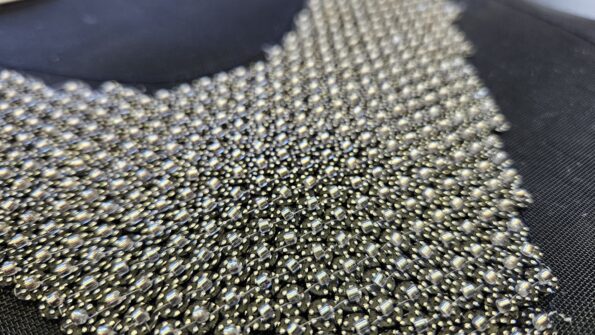
- Industrial embroidery combining beads and sequins
Combining beads with sequins, 3D embroidery and carpet stitch
Bead application can be combined with other embroidery techniques to develop a richer surface:
- Sequin embroidery can add light-catching shapes and patterns alongside beads and bugle beads.
- Raised 3D embroidery adds volume and structure around the decorative elements.
- Carpet stitch embroidery creates a textured ground that can contrast with shiny beadwork.
Tradition and innovation
Techniques such as Broderie de Lunéville inspire the decorative possibilities of beadwork. Industrial embroidery allows us to explore complex motifs and brilliant surfaces for fashion garments, accessories, footwear and interior-design projects, with sampling to establish the appropriate materials and construction.
To discuss a design or view embroidery samples, contact our team.
Marini Ricami 1986 — where tradition meets innovation.
0 comments on Industrial Bead and Bugle Bead Embroidery