
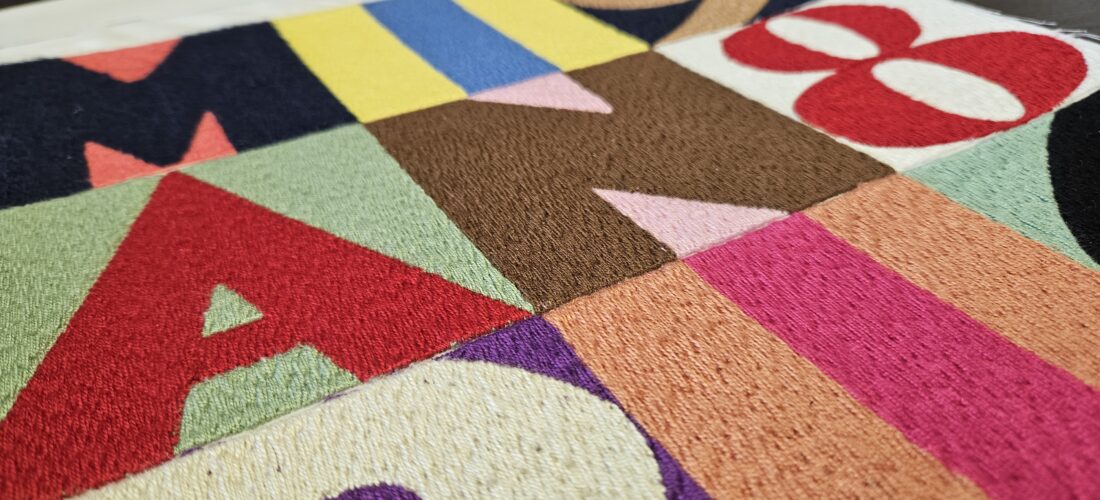
Decorative Textile Surfaces for Luxury Interiors and Fashion
- Posted by Flavio Marini
When industrial embroidery becomes textile architecture
In contemporary luxury design, fabric is no longer simply a functional material. Increasingly, it becomes a designed decorative surface capable of transforming an object, a garment or an interior.
Decorative textile surfaces bring together:
- design;
- technology;
- advanced textile techniques.
They can be used across many fields:
- high-end fashion and leather goods;
- luxury interior design;
- hospitality, including hotels and resorts;
- automotive interiors;
- yachts and aviation;
- events and scenic installations.
In this context, industrial embroidery is more than an ornament: it becomes a technology for creating surfaces.
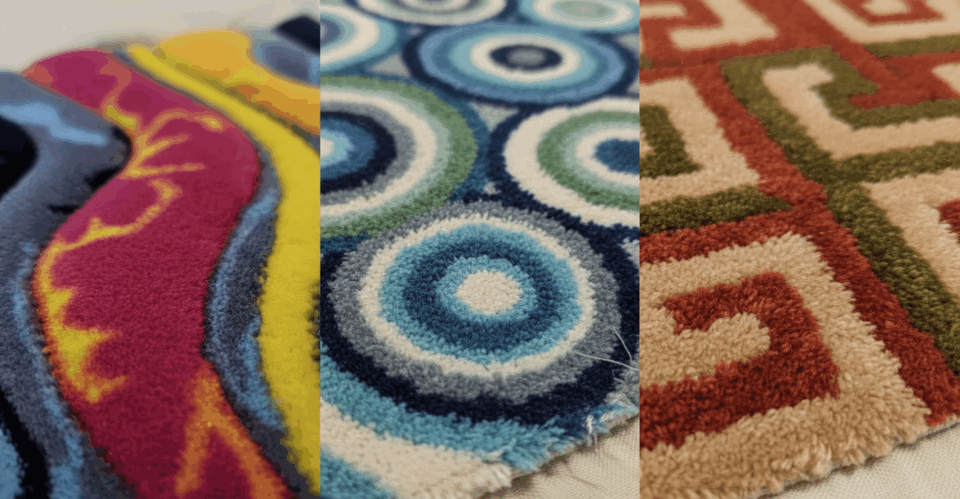
Multicoloured long-pile tufted embroidery with a three-dimensional effect.
Industrial embroidery as a surface technology
Embroidery has traditionally been associated with fashion. Advances in industrial machinery and experimentation with materials now allow it to create three-dimensional structures and complex textures.
A textile can become:
- an architectural surface;
- a decorative element for interiors;
- a technical texture for seats or panels;
- a design detail for accessories and leather goods.
In modern industrial embroidery, a project often begins as a surface study that brings together:
- yarns;
- materials;
- thicknesses;
- stitch density;
- three-dimensional effects.
The result is a textile surface that can work alongside materials such as leather, Alcantara, velvet, technical fabrics and composites.
-
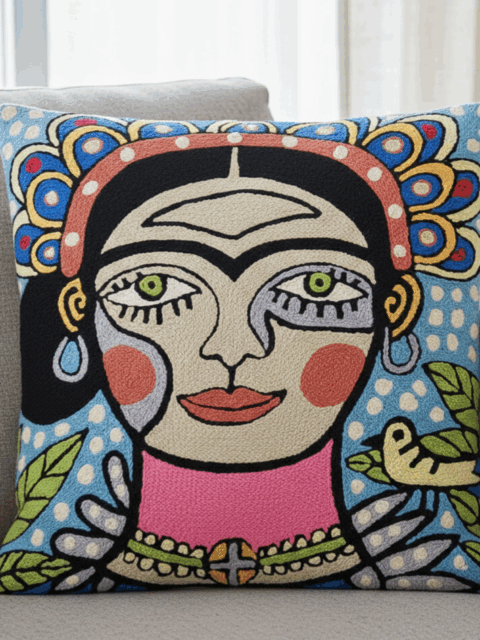
- Cushion with a Frida Kahlo motif embroidered in chain stitch
-

- Furnishing element decorated with chain-stitch embroidery
-
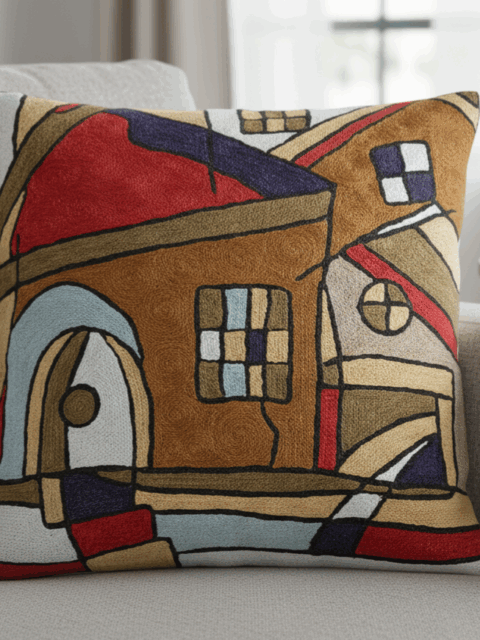
- Cushion embroidered with a stylised house in chain stitch
-

- Cushion featuring a stylised embroidered cat
-

- Cushion with a tiger motif embroidered in chain stitch
Applications in luxury interiors
Decorative textile surfaces are becoming increasingly important in high-end interior design. Embroidery can be used to produce:
- decorative textile wall panels;
- padded and quilted surfaces;
- embroidered headboards;
- decorative cushions;
- textile acoustic panels;
- scenic elements for hotels and yachts.
These techniques bring refined, customised textures into interiors, including effects that can be difficult to achieve with conventional methods.
-

- Skirt decorated with sequin fringe.
-
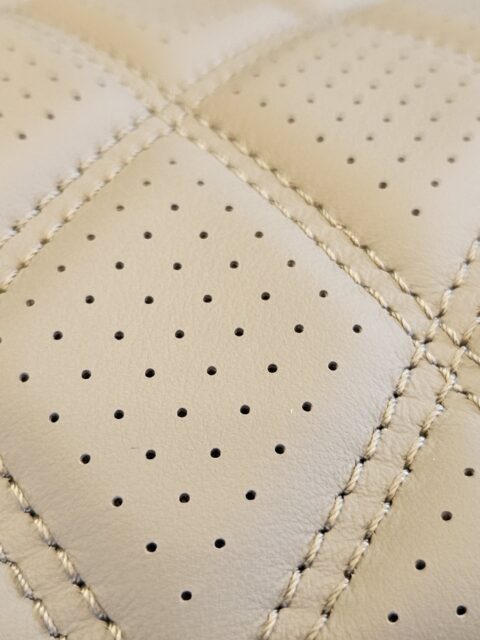
- Sample combining decorative quilting and perforation
-
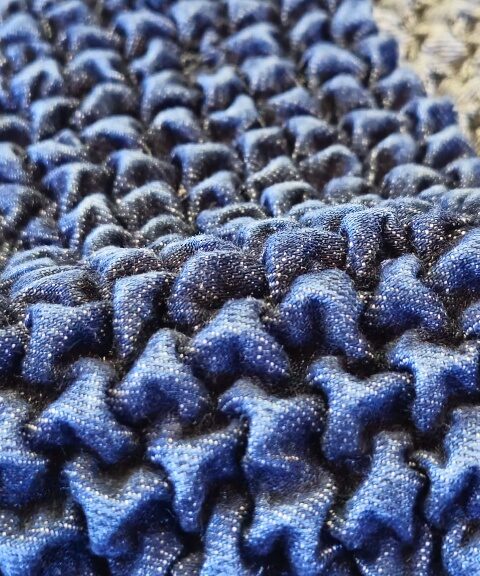
- Denim sample with a smocking-like textured effect
-
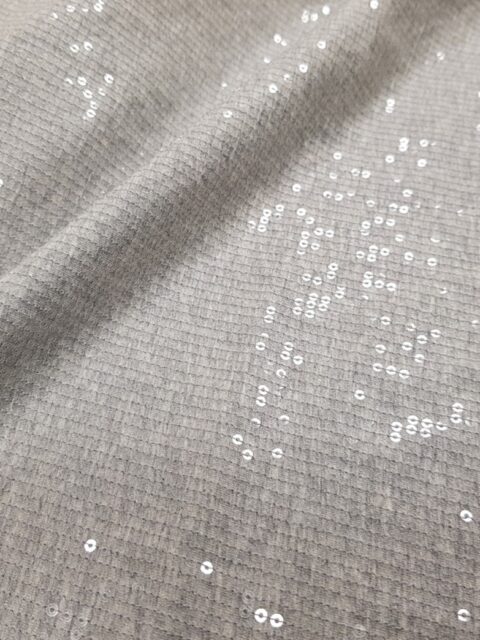
- Transparent 3 mm sequins embroidered on jersey for a wet-look effect.
Applications in fashion and accessories
Industrial embroidery continues to evolve in fashion, providing a way to create three-dimensional surfaces, intricate patterns and richly textured effects.
Typical applications include:
- embroidery on garments;
- decoration for leather goods;
- embroidery and appliqué for footwear;
- embroidered bag straps;
- decorative textile accessories.
Embroidery also makes it possible to develop repeatable production methods for techniques traditionally carried out by hand, retaining a couture-inspired appearance while allowing production to scale.
Marini Ricami’s experience
Over the years, Marini Ricami has built an approach around the decorative textile surface, applying industrial embroidery to different materials and sectors. Among the techniques developed and brought into production are:
Raffia embroidery
A technique that uses raffia yarns to create tactile, three-dimensional surfaces for fashion accessories and footwear.
Carpet stitch and tufting effects
This technique creates soft, three-dimensional, carpet-like effects for decorative surfaces and textured patterns.
Raised embroidery
A technique for producing soft, dimensional embroidery suitable for logos and three-dimensional decoration.
Industrial embroidered lace
A combination of lace aesthetics and industrial production methods, used in fashion and textile design.
-
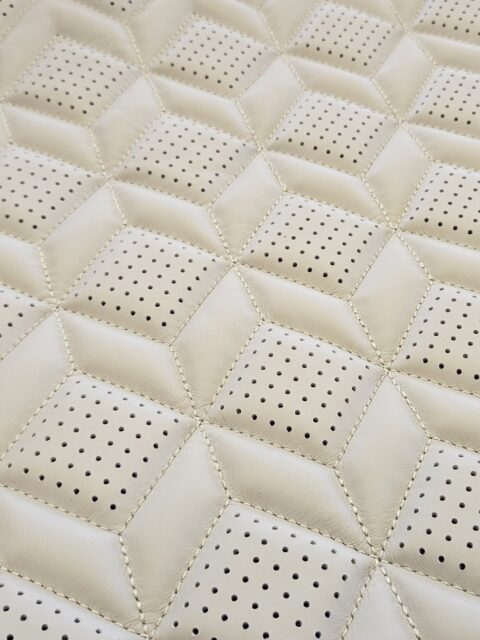
- Genuine leather perforated, stitched and padded for seating, armchairs or cushions.
-
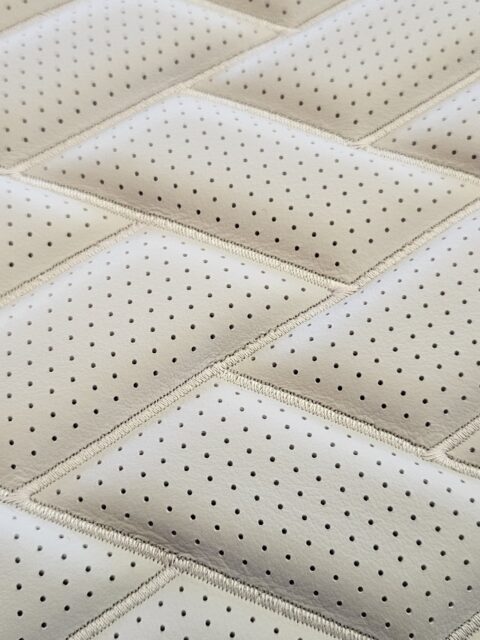
- Interior embroidery on perforated, stitched and padded leather.
-

- Example of embroidered seating upholstery.
-
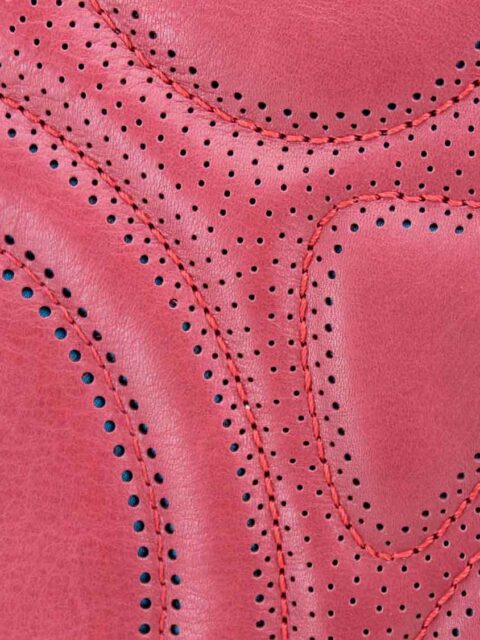
- Sample combining perforation with three-dimensional padding.
-
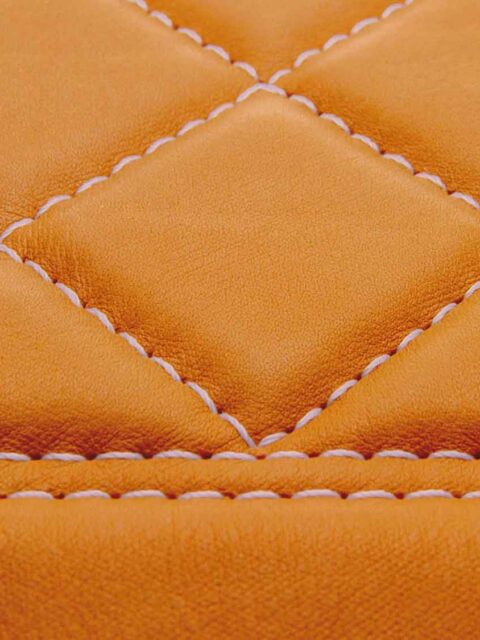
- Example of padded and quilted decorative material.
Other techniques and technologies
Alongside these main techniques, our workshop develops a wide range of specialist processes, including:
- embroidery on leather and technical materials;
- decorative quilting;
- three-dimensional embroidery;
- sequin applications;
- embroidery with specialist yarns;
- textile surfaces with tactile effects;
- embroidery on Alcantara and velvet;
- combinations of embroidery and perforation.
This approach turns embroidery into a platform for designing textile surfaces.
-

- Sequins embroidered to form the image of a face
-
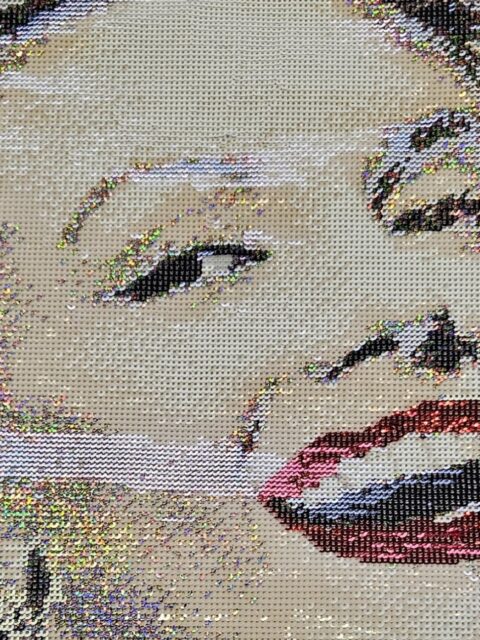
- Detail of a portrait embroidered with 2 mm sequins in eight colours
-
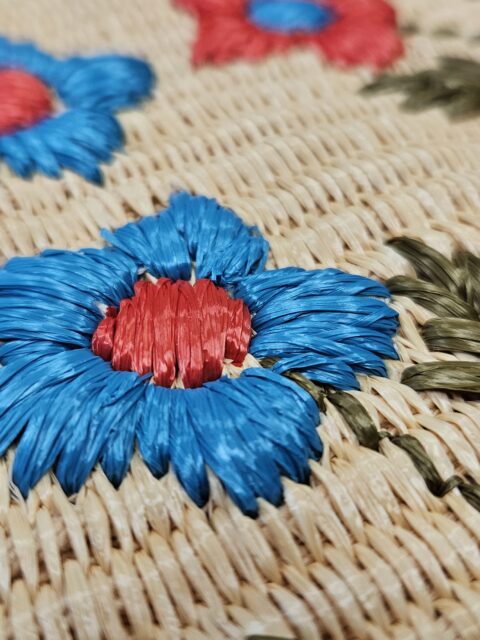
- Three-dimensional flower embroidered with raffia yarn.
-
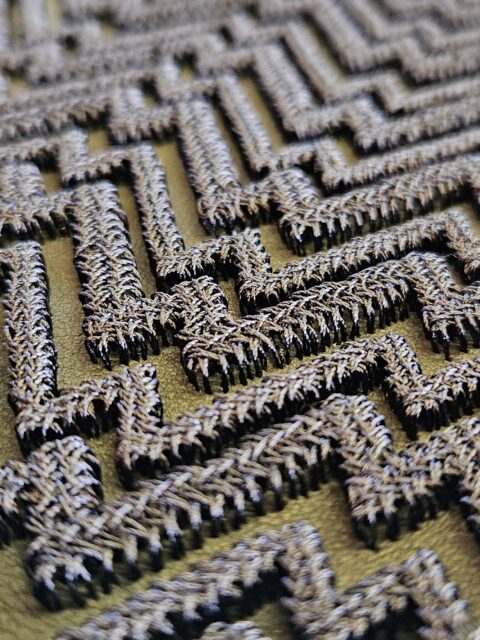
- Raised geometric embroidery on genuine leather, worked in glossy thread
Towards a new generation of decorative surfaces
Changes in design and materials are opening up new opportunities for industrial embroidery. More designers and architects are discovering the potential of decorative textile surfaces in fashion, interiors and mobility.
Embroidery can bring together aesthetics, technological innovation and industrial production.
The future of industrial embroidery
The industry is moving towards more purpose-designed textile surfaces, in which embroidery is an integral part of the design rather than an added decoration.
By combining technology, materials and creativity, industrial embroidery can become one of the most versatile techniques available to contemporary luxury design. Marini Ricami continues to develop solutions for fashion, interiors and mobility in this direction.
0 comments on Decorative Textile Surfaces for Luxury Interiors and Fashion