
Carpet Stitch Embroidery: Technique, Materials and Uses
- Posted by Flavio Marini
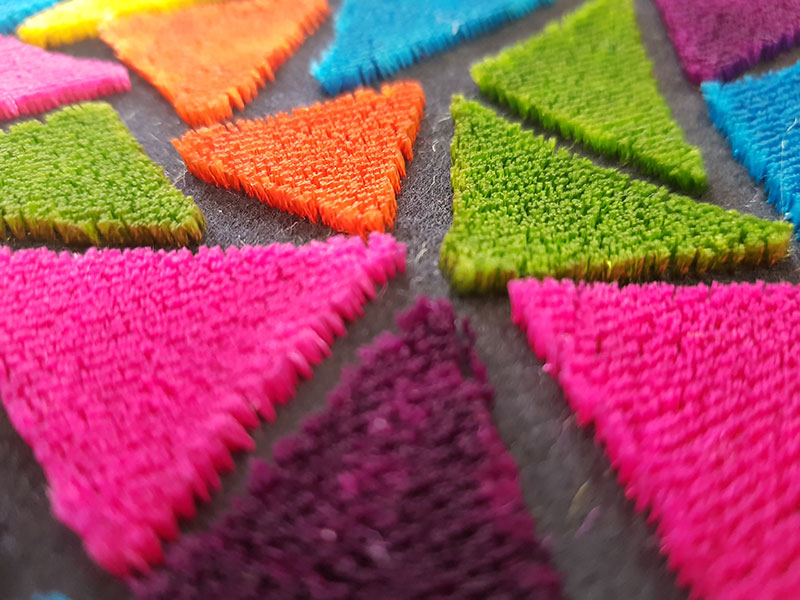
Carpet stitch embroidery, also described in our collection as velvet stitch or carpet-effect embroidery, creates a raised surface reminiscent of velvet or a soft rug. It can be made by hand or with embroidery equipment adapted for this effect. Industrial production allows the same texture to be developed across repeatable samples and larger design areas.
-

- Flower embroidered in carpet stitch on a tulle base.
-

- Butterfly with coloured carpet stitch on a lurex-embroidered tulle base.
Marini Ricami 1986 uses industrial embroidery machinery configured for carpet stitch. Different yarn colours can be combined in a design, subject to the pattern, base material and production requirements.
How the raised effect is made
The process builds a covering layer of yarn on the base fabric. The yarn is then cut or sheared to produce an even, soft pile. The shearing stage gives the embroidery its characteristic tactile surface and brings out the colours and shapes of the design.
-

- Geometric carpet stitch pattern made with several coloured yarns.
-

- Carpet stitch embroidery with fancy yarns and geometric shapes.
Where carpet stitch can be used
Carpet stitch can be embroidered directly onto a garment fabric or made as a patch or accessory to be applied later. It is also used for details on bags, footwear and other fashion items. Work on leather requires sampling to confirm how the material responds to the stitching and finishing.
Possible base materials
The original sample collection includes designs on or proposed for:
- genuine or imitation leather;
- satin and silk;
- denim and viscose;
- sweatshirt fabric and felt.
Each base has different thickness, stretch and handling characteristics, so compatibility should be checked for the specific project.
Yarn options
The raised effect can be explored with different yarns, including recycled PET polyester, glossy or matte polyester, glossy or matte viscose, metallic-effect yarns, cotton, wool and other natural fibres. Specialist yarns mentioned in the original article, such as ceramic-containing yarns, require a project-specific check. For context on material labels, see our guide to organic and recycled embroidery yarns.
To view carpet stitch samples or discuss a material and colour combination for a new design, contact Marini Ricami 1986.
0 comments on Carpet Stitch Embroidery: Technique, Materials and Uses