

AI Rendering for Industrial Embroidery and Fashion Design
- Posted by Flavio Marini
Fashion and design teams often need to compare several directions before committing to a physical embroidery sample. A digital render can help show how a motif might look on fabric, leather, denim, footwear or an accessory. Marini Ricami offers AI-assisted rendering to help design teams review embroidery directions before commissioning a stitched sample.
What is an embroidery concept render?
-
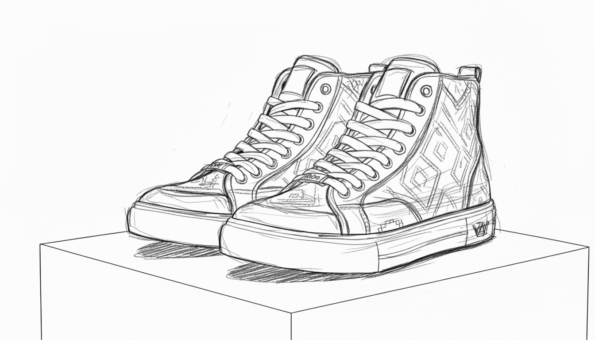
- Hand-drawn design sketch for studded sneakers
-
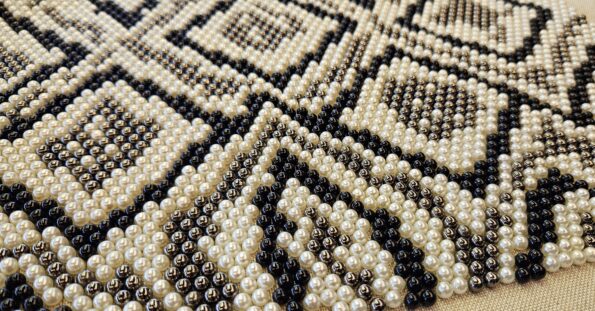
- Illustrative ABS stud sample with a snakeskin-effect design
-
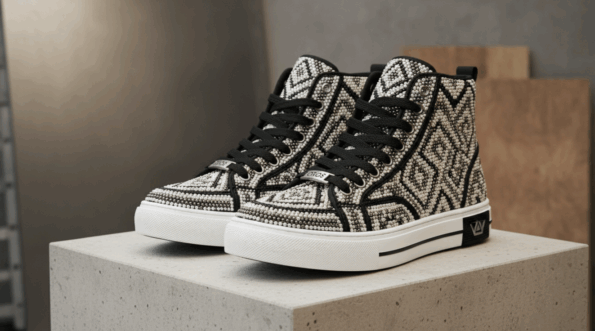
- Illustrative concept render of studded sneakers
A concept render translates a sketch or design brief into an image for discussion. It can suggest colour, placement, scale and material appearance, but it remains a visual proposal. Marini Ricami uses a proprietary LLM informed by its embroidery archive and know-how to produce photorealistic concept views, often within hours of receiving a defined brief. The exact render and timing depend on the project.
How the rendering workflow works
- Creative input: the style office provides a sketch, image, material reference or written brief.
- Visual exploration: the AI system proposes variations in motif, colour and placement inspired by embroidery techniques and materials.
- Review: the team compares concept images, identifies what is worth sampling and checks whether the proposed stitches and materials are technically plausible.
- Physical validation: a digitised stitch programme and sample are needed before the appearance or production feasibility of a finished item can be confirmed.
-
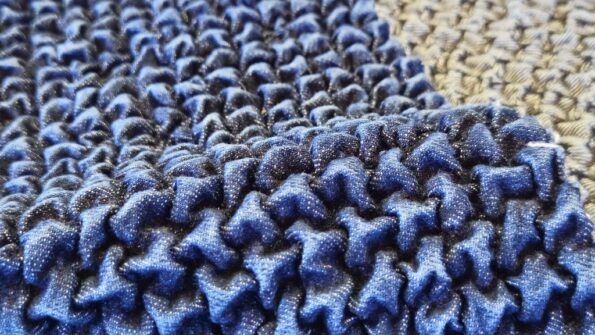
- Denim sample with a smocking-like textured effect
-
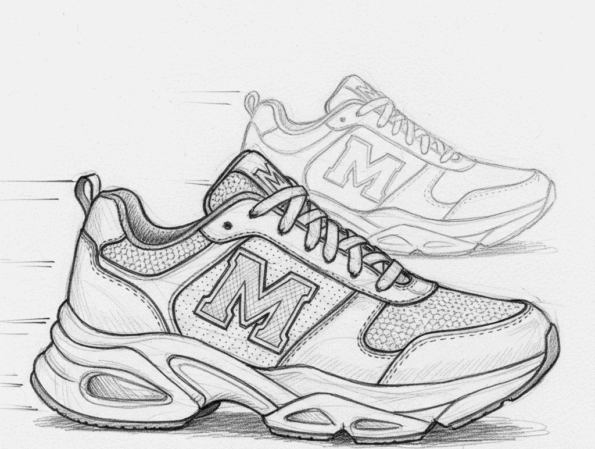
- Initial sneaker sketch with an M design element
-

- Concept render of a sneaker with a smocking-effect denim detail
What renders can help a style office decide
- Speed of visual comparison: several concepts might be reviewed before making a sample. The team can compare options in hours instead of waiting for every direction to become a physical sample.
- Material planning: images may help narrow the options, but they cannot eliminate every physical test or guarantee a reduction in waste.
- Technical discussion: a render can highlight questions about stitch density, support fabric, yarn or finishing. It cannot be treated as a production specification.
- Creative range: different colourways, textures and patterns can be explored, within the limits of available materials and equipment.
-
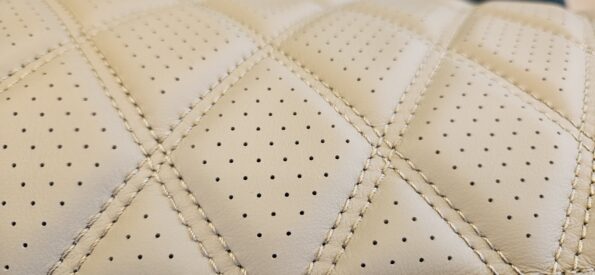
- Sample combining decorative quilting and perforation
-

- Initial design sketch for a women’s boot
-

- Concept render of a boot with quilted embroidery and perforation
From a sketch to a testable idea
The image sequences in this article compare sketches, material references and digital product concepts. They illustrate the kind of conversation a design team can have before embroidery development. Concept renders illustrate a possible result; a stitched prototype confirms the final appearance and production process. Material samples and stitched prototypes remain the basis for checking colour, relief, hand feel and industrial feasibility.
-

- Initial design sketch for an embroidered cap
-

- Illustrative render of an embroidered cap
Virtual prototyping and physical embroidery
Digital visualisation can support early decisions in fashion, footwear, leather goods and interior design. The next step is to turn the chosen concept into a stitch programme, test it on the selected base and review the actual sample. Earlier visual review can focus sampling, while any cost or material saving depends on the specific project.
-

- Illustrative floral-skirt concept with black Cornely-style embroidery
-

- Initial design sketch for a floral women’s skirt
-

- Illustrative skirt concept with colourful raised embroidery
Contact us to discuss a design idea and the appropriate sequence of visual development, sampling and production checks.
0 comments on AI Rendering for Industrial Embroidery and Fashion Design